Skip to content

Natural Ways to Up Your Game

In addition to using acupuncture and other forms of traditional Chinese medicine, there are other ways athletes seek to up their game. One of the simplest ways to increase performance is by watching what you are consuming. You ever heard the saying you are what you eat? Chances are you have, if not, well I am glad that now you have, because there could not be a truer statement. continue reading »

Posted in Acupuncture, Diet, Herbal Medicine | Tagged , , , , , | Comments Off on Natural Ways to Up Your Game

Cupping Therapy

Cupping Q & A

By Qineng Tan, L.Ac., Ph.D. & Xiaomei Cai, L.Ac., Ph.D.

What is cupping?

Cupping is a healing modality that uses suction to move blood and energy (Qi) from inside the body out towards the surface. It encourages more blood flow in a particular area. It is usually used as an additional treatment in conjunction with acupuncture and/or massage.

How does it work?

There are a few different techniques. Most commonly heat is used: a flame is lit inside a glass or bamboo cup, which burns oxygen to create a negative pressure. Then the cups are placed against the skin in the affected area, usually along a meridian line. Another way is to use a pump to pull air out of the cup. A cup might be firmly attached to one localized area for 10-15 minutes. Another technique is “moving” or “walking” cupping, during which the cup might be moved around along both sides of the spine or in a circular motion on the back.

Where does cupping come from? How long have people been doing this?

Many ancient healing traditions, particularly from Asian and Eastern European cultures, have used cupping as part of their healing systems. In China, the documented use of cupping for medical purposes goes back for 3000 years.

What kind of cups are used?

Traditionally, cups were made of bamboo or clay. Nowadays, we most commonly use cups made of smooth, rounded glass that can be sterilized.

What kind of health condition is cupping good for?

  • Injuries that involve blood stagnation, such as muscle strain, benefit from having excessive blood removed, reducing swelling and inflammation in the area.
  • Arthritic pain can be relieved by removing dampness and blood stasis to reduce inflammation.
  • Muscle spasm, stiffness and tightness due to tension can be released by cupping.
  • Cold or flu at the very beginning. Cupping can help stimulate the body’s defense system to fight off viral infection.
  • Detoxification: cupping can help remove pathogens and is very helpful when going through a detoxification process; it helps draw toxins out from deep in the internal organs.

These are just a few of the most common reasons we might use cupping, but there are many times that it can be helpful. Many conditions that involve stagnation or blockage in the body, such as chest (cold) congestion or coughs, even asthma, can be alleviated by the heat and suction that cupping on the upper back creates.

What sort of condition would cupping NOT be good for?

Cupping is not for every body or every condition. If you are weak, suffering from some type of physical deficiency, then cupping could draw energy out of you, weakening your body further. In that case, acupuncture, moxa and herbal treatment without cupping would be better, because they work to strengthen the body.

Are there any side effects?

Those round bruises you have seen in pictures are very common. This is actually a good sign; it shows that blood has been brought to that area and concentrated there. The bruises may last about a week, but they are nothing to worry about. It is also possible that occasionally a blister will form. This, too, shows that fluid has been pulled towards the surface. Blisters should not be popped, just left alone to be absorbed and healed naturally.

Obviously, it is crucial that cupping be performed by someone who is trained and experienced with this technique. Care must be taken so that the skin is not burned, and the timing is very important to achieve the desired results.

How many cupping treatments would I need?

Cupping is not done “in a vacuum.” Normally, cupping would be part of a broader treatment, involving acupuncture, herbal formulae, massage, and other modalities. How many treatments you might need depends on the history and severity of your condition. For example, when people go through our One Week Detox Program, they receive 3 treatments combining acupuncture and cupping over a period of 7 days.

What do I do after I’ve had cupping?

We advise that people do not bathe or swim for at least 2 hours after a cupping treatment. Also, avoid drinking or eating anything icy cold, or exposing yourself to wind. Stay warm, drink tea. Cupping “opens up” channels in the body, allowing energy and fluid to get out. We don’t want anything cold and damp “getting in” at this time.

I’m ready to try cupping! What should I do?

Call us and schedule an appointment! 310-451-5522
Posted in Acupuncture, Chinese Medicine, Uncategorized | Tagged , , , , , | Comments Off on Cupping Therapy

Olympians Who Receive Acupuncture

Blogimg - Sports Figures and Olympians Who Use Acupuncture and Why - Doc_640

It has been shown that acupuncture can help the body in many ways. From repairing the digestive system to boosting Qi, enhancing athletic performance to mending strains and sprains, acupuncture has many uses and most of these uses are beneficial for professional athletes.

As the Olympics in Rio get closer and closer with each passing day athletes are beginning to fine tune their bodies for the upcoming events. Every athlete wants to be at their top performance level as they put everything on the line for their country. Acupuncture is one key some Olympians use to achieve that extra competitive edge and get their physical and mental aspects ready for the games. Some of the biggest names on the Olympic stage are making acupuncture part of their health regimen. continue reading »

Posted in Acupuncture | Tagged , , | Comments Off on Olympians Who Receive Acupuncture

6 Truths About the Not-so-sweet Side of Sugar

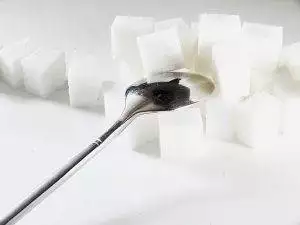
Blog-img - 6 Truths About the Not-so-sweet Side of Sugar_640A study published by the JAMA Internal Medicine found that more than 70 percent of Americans consume more than the recommended daily amount of sugar. Sadly, most of us are addicted to sugar, which happens to be hidden in most of the foods and drinks we consume. Added sugar can cause a whole array of problems that can be short term as well as long term. If you are experiencing health problems, lowering your sugar intake may be one of your best options. Below are 10 truths about the ugly side of sweets. continue reading »

Posted in Diet, Health, Nutrition | Tagged , , , | Comments Off on 6 Truths About the Not-so-sweet Side of Sugar

Yin-Yang: and What It Means in Traditional Chinese Medicine

by Qineng Tan, L.Ac., Ph.D.


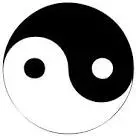
The concept of Yin and Yang is central not only to the ancient Chinese philyin yang symbolosophy called Taoism, but also to the philosophy and practice of Traditional Chinese Medicine. It is a concept of dualism, meaning that everything in the Universe is made up of two opposing, yet interdependent, forces. One type of energy will lead to the other, and back again, over and over: day into night, darkness into light, birth into death, and so on. Without Yang, there is no Yin, and without Yin there can be no Yang. They cannot exist independently.

You have seen the Yin-Yang symbol many times: two teardrop shapes, one black, one white, chase each other around in a circle. Inside each teardrop is a small circle of the opposite color. This visual representation of Yin-Yang serves as a reminder that within each type of energy, some of the other is also lurking, and vice versa.

In Mandarin Chinese, the character for Yin – 阴 – can have several meanings, including: “feminine,” “moon,” and “cloudy.”

The Yang character – 阳 – means  “masculine,” “sun,” and “bright.”

Yin-Yang is not just about opposites, though, and to reduce it to ideas like male-female, or dark-light, is too simplistic. Yin-Yang is about transformation–the biggest, most meaningful transformations that occur in our lives and in the world all around us. It is also about balance. The dual energies of Yin and Yang must work in harmony at all times. If there is too much of one energy, there will be too little of the other, and something will have to change in order to restore the balance.

This is where the concept of Yin-Yang comes into play in Traditional Chinese Medicine. Illness occurs in the body when there is an imbalance of energies. Imbalances will show up as problems in the organ systems. Some organs relate the to Yin meridian (including the kidney, liver, lungs, spleen and heart), while others relate to the Yang meridian (stomach, large intestine, small intestine, gall bladder).

Considering the functions of the human body, Yang refers to active energy and heat, while Yin is passive energy, and cold. When a patient comes to us, we are looking and listening closely to find out how the imbalance is revealing itself. For example, swelling is a Yin condition, while pain is a Yang condition. Once we have begun to determine the nature of the imbalance, we will not only perform acupuncture, but also prescribe herbs and specific foods, as well as lifestyle changes, that will help restore the balance of Yin and Yang in the body.

Because you cannot have Yang without Yin, and so on, we focus on keeping both parts alive and strong. If you kill the Yin energy, you will also kill the Yang energy. In Chinese medicine, when we want to increase or strengthen one kind of energy, we call it “tonification.” Reduction, or calming, of energy is “restoring.” So, if a patient has, for example, excessive Yang and weak Yin, we will work to tonify the Yin and restore the Yang.

According to the philosophy of Yin and Yang, even the worst situation has some positivity hiding within it. So, we always look for the other side. As you travel along on your personal journey towards optimal health, keep in mind that pain and illness appear to show you where you need to work to create balance in your own life.

Posted in Chinese Medicine, Traditional Chinese Medicine | Tagged , , , , , | Comments Off on Yin-Yang: and What It Means in Traditional Chinese Medicine
310-451-5522 Directions Contact/Schedule