by Qineng Tan, L.Ac., PhD., O.M.D.
A sprained ankle is one of the most common injuries. It can happen to kids and adults of all ages. It can happen when you’re actively playing a sport, or just walking around in your own home.
A sprain can be one of three severity levels:
Grade I
A minor sprain can occur when you are just walking. The ankle turns in sharply, causing the muscles and liga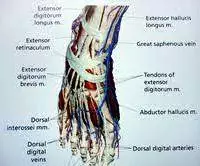 ments to pull and tear slightly.
Grade II
A moderate sprain might happen when running, or because of a fall. In this case, the ankle is twisted further in, causing a partial tear of the ligament.
Grade III
A severe sprain happens because of significant impact—such as a fall at great speed or from a height, or a fall compounded by someone’s else weight, such as might happen while playing a sport like football, soccer or baseball. In this case, the ligament might be torn completely. In very severe cases, it may also cause some fracturing of the ankle and/or even dislocation.
The ankle is a wonder of design; it is a very stable joint that not only carries your body weight, but withstands a lot of pressure and impact when you run and jump. It is really made up of two joints; the true ankle joint is formed by the meeting of three bones–the tibia, fibia and talus—and works like a hinge to create the up and down movement of the ankle. The subtalar joint is formed by the talus and the calcaenus, and allows for the side-to-side motion of the ankle. Ligaments are the soft tissues that connect bones to bones, while tendons are the soft tissues that connect muscles to bones; both are made up of small fibers of collagen. Cartilage is the tough yet soft, slippery tissue that creates cushioning and slip between the bones. A sprained ankle can result in torn tissues in the muscles, tendons or ligaments, damage the cartilage, and in severe cases, may involve fractures in the bones.
The pathology of a sprain begins in the acute stage—the first 1-2 days–with internal bleeding at the injury site. Fluid builds up in the tissues of the joint, which leads to swelling. After a few days, the active bleeding stops and inflammation begins to exert pressure around the area, compressing the blood vessels and slowing down the flow of fresh blood. This results in blood stagnation.
When blood has built up in the joint and stopped moving freely, it has a negative effect on the healing process. Incomplete healing can mean that the ankle loses some of both its stability and flexibility. The tendons and ligaments can become fragile, which means the joint is now more susceptible to re-injury.
For immediate home care of a sprain, follow the Universal Rule of RICE. (see box below) Do not massage the area during the first week of recovery. After that, gentle self-massage between the knee and ankle, focusing on releasing tightness in the shin and calf, is best. Don’t walk or put any weight on the foot for 3-7 days, depending on the severity of the injury. When you are ready to being exercising the ankle, begin with gentle, non-weight-bearing movements.
A good exercise to try is the “A to Z Exercise”:
Lift the injured leg, or cross it over the other leg so the ankle and foot can move freely. Using the big toe as the point of your “pencil,” draw the letters of the alphabet in the air, using at first very small, circular movements of the ankle joint. Gradually, work up to making the letters larger.
After 2-3 weeks, you may be ready begin engaging in activities that increase the range of motion, yet still keep most of your weight off the ankle, doing exercises such as pedaling a bike, swimming, or walking through water.
Gradually, after 4-5 weeks, you will be able to resume walking on a flat surface.
It is good to see your acupuncturist as soon as possible after spraining an ankle. The treatment will focus on stopping the internal bleeding and reducing the swelling of the joint. Minimizing inflammation and maximizing the constant circulation of blood will speed healing and help to ensure that the injury does not become a chronic one.

 Irritable Bowel Syndrome, otherwise known as “spastic colon,” is a common disorder that affects the colon and causes many disruptive symptoms. Many of these symptoms can be managed with a simple change in diet and lifestyle. Chinese herbal medicine and acupuncture may be able to help. continue reading
  Most people have heard of the field of acupuncture by now, but did you realize the scope of the practice encompasses Chinese medicine, which includes so much more than needles? Let’s explore this ancient therapy.
 One of the best gifts you can give your mother this Mother’s Day is the gift of acupuncture. Acupuncture can help with an abundance of health problems and get you feeling one hundred percent again. Mom’s make the world work, it’s a known fact. So this holiday season you should give your mother the gift of acupuncture, here are seven reasons why.