

- Art of Wellness Acupuncture & Traditional Chinese Medicine (TCM)11704 Wilshire Blvd, Suite 295, Los Angeles, CA, 90025
myartofwellness@gmail.com310-451-5522 - Sign up to receive news and updates and get my free report:“The Top 10 Reasons to Try Acupuncture”

Traditional Chinese Medicine
All About Moxibustion
Traditional Chinese Medicine is a medical system that incorporates numerous methods for treating disease and illness. One of the tools found in the toolbox of the TCM practitioner is known as moxibustion.

Moxibustion is a technique that involves the burning of mugwort, known as moxa, which is an herb that facilitates healing. The purpose of moxibustion is to stimulate the flow of Qi (pronounced “chee”), strengthen the blood and maintain general health. Qi is translated as life energy. There are two types of moxibustion, direct and indirect. Direct moxibustion uses moxa shaped into a small cone and is placed on top of an acupuncture point and burned. This type of moxibustion has two subcategories, scarring and non-scarring. Scarring moxa burns until it distinguishes on its own. This may lead to localized scarring and blisters. Non-scarring moxa allows for the moxa to be placed on the acupuncture point, lit, extinguished and removed before it burns the skin. continue reading
Wisdom Story from Dr. Tan – Bian Que and the King
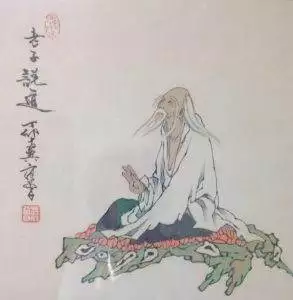 There once was a well-known Chinese physician who lived over 2300 years ago, named Bian Que. One day, the King called Bian Que to him and asked him: “I hear you have two brothers who are also physicians. Can you tell me–who is the best physician? Now, be honest!”
Bian Que answered, “My oldest brother is the best. My second brother is better than me. Actually, I am just average.”
The King was surprised. “But you are the one who is famous throughout China! Why do you say they are better than you?”
Bian Que said, “My oldest brother believes in a lot of prevention. He looks for the source of illness and treats problems before people even feel anything. So, his patients don’t even realize how much he has done for them, and they don’t talk about him much.
“My second brother treats people at the first sign of a disease. They are having some symptoms, so he treats them before they get any worse. Because of this, people notice that he has helped them, and he has become fairly well-known in our home town.
“But me? People come to see me as a last resort, when they are already very sick. I use the strongest herbs, the most powerful acupuncture treatments. I even perform surgeries! In fact, a lot of the time, I can’t do anything to help them because they are already too ill. But sometimes I am able to save someone’s life. That is the kind of thing people like to talk about, so I am the one who has become famous.”
So, the King understood his meaning: the best physician is the one who prevents his patients from becoming sick, not the one who tries to save them when they are already near death.
Heart Afire: The Fire Element
The organs in Chinese medicine are more than just a physical representation. The organs include not only their physiological function, but also their mental, emotional, spiritual and elemental qualities that align with nature and the seasons. Let’s explore the heart.
The heart season is summer, and heart is considered the most yang: hot, bountiful and abundant. Yang is what is bright, moving, outward, hot and loud. Yin is what is more inward, still, dark and cooler. The color of the heart is associated with red, the climate is heat, the flavor is bitter and it’s paired organ is the small intestine (many urinary issues are due to “heart fire” heat descending). The sense aligned with heart is the tongue, and the vessels associated with heart are the tissues. The heart sound is laughing, and the emotion is joy. The heart houses what is known as the shen, which is the mind and spirit. continue reading
Valentine’s Day, TCM and Heart Health
 Every February men all over the world flock to the local flower shops and jewelry stores in search of the perfect bouquet or piece of jewelry to express their undying love to their significant other. Why? Nobody knows for certain, but there are at least a couple of theories.
One theory is a Catholic priest, Valentine, was imprisoned for helping Christians escape Roman prisons. While he imprisoned himself, Valentine fell in love with a young girl who visited him. Allegedly, before his death, Valentine wrote a letter and signed it, “From your Valentine.” Thus, the first Valentine’s Day card was created, or so it is reported. continue reading
New Year Traditions
By Xiaomei Cai, L.Ac., Ph.D.
In China, the New Year celebration is the biggest holiday of the year. Everyone makes a great effort to reunite with family members and spend some time together.
In the days leading up to the New Year, the focus is on cleaning the house, decorating, and making feng shui adjustments that suit with the new energy arriving. The Monkey’s flower is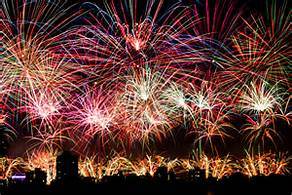 the Chrysanthemum, so there will be profusions of these festive flowers in evidence everywhere.
The New Year’s Eve dinner is the feast of all feasts! Dish after dish arrives at the table. The sense of having more than enough is important – it represents the hope that there will be food aplenty for everyone throughout the year. Likewise, many of the individual dishes are symbolic. For example, the essential fish and dumplings mean “prosperous” (these are a play on words), while noodles and long beans are representative of “long life.”
Shou Sui means “after the New Year’s dinner,” and refers to the tradition of staying up at least until midnight to watch the fireworks – but many family members stay up all night, talking and catching up with relatives and friends they have may not have seen all year.
There are different ways of wishing people “Happy New Year,” depending on what region of China you are in. We are from Southern China, where our traditional greeting is “Gong Xi Fa Cai!”, which means “congratulations and prosperity.” Other greetings are:
- Wan Shi Ru Yi: everything follows your will
- Ji Xiang Ru Yi: harmony and everything follows your will
- Sui Sui Ping An: harmony and safety year around
The themes of the New Year, as you can see, center around harmony, prosperity, safety and good health.