
By Qineng Tan, L.Ac. Ph.d. and Xiaomei Cai, L.Ac., Ph.D.

Chronic pain in your outer hip? Hip pain when lying on your side? This can be a sign of Greater Trochanteric Pain Syndrome (GTPS), or gluteal tendinopathy. Acupuncture treatment can help relieve lateral hip pain due to GTPS, hip bursitis, and gluteal tendinopathy.
Lateral hip pain is a common problem, particularly for women over 40. In some cases, hip pain can be related to perimenopause and menopause, as changes in estrogen levels trigger inflammation in the tendons, causing tendinitis (inflammation or irritation of a tendon) or tendinopathy (general degeneration of a tendon that causes pain and swelling).
Bursitis can also be a common cause of hip pain. Bursa are small sacs of fluid that provide cushioning in the joints. When bursae (plural) become inflamed and stiff, it causes pain and swelling in the area.
What is GTPS?
The term “greater trochanteric pain syndrome” is a general way to refer to any discomfort or pain in the outer hip and thigh area that is caused by tendinitis, gluteal tendinopathy, bursitis, IT band problems, or trauma/injury to this area. Other types of hip pain can include: sciatica.
The greater trochanter is the rounded, bulbous part of the hip bone that juts out to the side; when you lie on your side, your weight is partially balanced on that bone.
The gluteal muscles (gluteus maximus and gluteus medius) are attached to this bone by tendons; these muscles and tendons are largely responsible for the movement and stabilization of the hip joint.
The loss of estrogen during perimenopause and menopause can weaken tendons, which have estrogen receptors. The hips abductor muscles can also become weaker, which puts extra stress on the tendons to keep the hip joint stable. When the chronic pain and tenderness leads to women reducing their physical activity, the whole problem can become worse.
Strengthening the muscles and tendons with the right exercise is crucial for keeping the hip joint stable and pain-free. Reducing hip pain and inflammation with acupuncture and TCM can help you feel better and return to your strength training and walking routines.
GTPS Symptoms
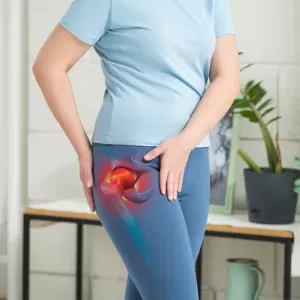
Greater trochanteric pain syndrome is chronic and can change over time. The pain might be sharp and come on suddenly, or build up slowly over time.
Symptoms of GTPS include:
- Chronic hip pain or soreness of the outer hip area
- Pain that radiates from the hip to the buttocks, low back pain, or thigh
- Pain that is pronounced when you lie on your side, or sleep disrupted by hip pain
- Numbness in the hip and thigh area
- Swelling in the hip and thigh area
What does GTPS pain feel like? This type of persistent hip pain can feel like a deep ache in the hip joint, a general tenderness just under the skin, or a sharp pain when you put weight on the affected leg.
The pain may be particularly triggered when you stand for long periods of time, sit with your legs crossed, or climb stairs.
Treatment for GTPS
Generally, GTPS, hip bursitis, and gluteal tendinopathy are considered to be problems with the soft tissues (muscles, tendons, and bursae) in and around the hip joint that will eventually improve on their own.
The goal of most treatments is to reduce pain symptoms, while making conservative modifications (like changing the way you stand or your sleep position) and engaging in gentle exercise. Recovery from this type of hip pain may take months.
Pain remedies such as icing, heat, massage, over the counter pain medications and anti-inflammatories may be recommended, as well as corticosteroid injections.
Acupuncture and TCM offer a way to help reduce pain and inflammation without side effects.
Can Acupuncture Help GTPS?
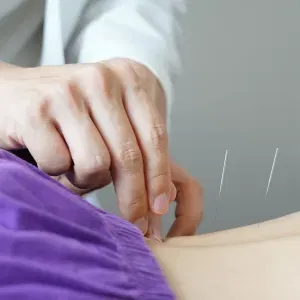
Acupuncture has been shown to be an effective treatment for pain of all kinds, due to its effect on the secretion of natural peptides in the body that reduce pain.
A review of studies concluded the acupuncture treatment for hip pain produced significant benefits compared to conventional treatment alone and combined treatments.
According to TCM theory, problems with painful, stiff tendons are considered a type of Bi Syndrome. Bi Syndromes are obstructions of Qi in the body that are caused by invasion of wind, cold and dampness. This type of invasion can happen due to external factors like weather, habits that expose you to cold and dampness, overuse or repetitive motions of the joints the weaken the tissues, underlying deficiencies in nutrition or specific organ systems, or even emotional issues that can block or deplete your energy.
Acupuncture treatment helps by improving blood flow to the area to nourish soft tissues and help relieve stiffness and improve flexibility. Based on the overall type of Bi Syndrome that is observed in a person’s symptoms, the acupuncture practitioner will choose acupoints along the affected meridians to help bring Qi and blood to the painful area, and the organ systems that are underlying causes of the blockage.
Herbs that strengthen and tonify the organs and tissues will also be prescribed.
Cupping is another TCM healing modality that can reduce muscle tension and improve the body’s natural ability to heal the tissues. Moxibusion can bring warmth, reducing pathogenic cold and dampness.
TCM and acupuncture also work on a hormonal level to help relieve tendinopathy pain. Balancing estrogen levels can help to keep the soft tissues supple and relieve muscle tension and pain in the tendons. Many women going through perimenopause and menopause can find relief from their symptoms, not only of joint pain, but sleep problems, vasomotor symptoms, itchiness, and more, through acupuncture treatment and herbs.
Acupuncture Near Me for GTPS in Santa Monica, West Los Angeles
Dr. Tan and Dr. Cai at Art of Wellness Acupuncture and TCM in Brentwood have over 35 years of experience in both TCM and Western medicine, helping people find relief from pain. While both doctors treat all types of conditions, Dr. Tan specializes in pain management and orthopedic issues, while Dr. Cai specializes in women’s health and hormones. If you or someone you love has been suffering with hip pain, do not hesitate to reach out to us to schedule a consultation. Relief from hip soreness is possible through a series of acupuncture treatments.
*This article is for education from the perspective of Traditional Chinese Medicine only. The education provided by this article is not approved by FDA to diagnose, prevent, treat and cure human diseases. It should not stop you from consulting with your physician for your medical conditions. Traditional Chinese Medicine is based on Qi, which is an invisible force that usually cannot be observed by modern science. Because science focuses on testing ideas about the natural world with evidence obtained through observation, these aspects of acupuncture can’t be studied by science. Therefore acupuncture and Chinese herbs are often not supported by double-blind, randomized trials, and they are considered alternative medicine therapies in the United States.
