
- Art of Wellness Acupuncture & Traditional Chinese Medicine (TCM)11704 Wilshire Blvd, Suite 295, Los Angeles, CA, 90025
myartofwellness@gmail.com310-451-5522 - Sign up to receive news and updates and get my free report:“The Top 10 Reasons to Try Acupuncture”

Traditional Chinese Medicine
TCM for Cold and Flu Season
by Qineng Tan, L.Ac., Ph.D.
TCM has a history of treating illness going back thousands of years. One particularly famous doctor of the Ming dynasty (6th Century A.D.), named Sun Simiao, wrote a 30-volume encyclopedia called “Prescriptions for Emergencies Worth a Thousand Gold.” This work not only described herbal formulas (although it did detail over 4000 of them), but treatments for all types of conditions, including entire volumes on the care of women and children.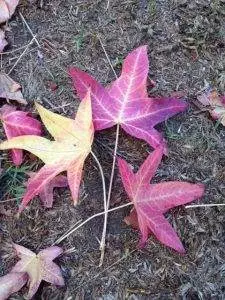
Sun Simiao was practicing during a time of widespread infectious disease in China, and he developed herbal treatments for all types of illnesses, including what he would have called “blood fever.” His pioneering work is the basis for treatments we still use today for treating viruses.
You have probably heard the stories about how, in the olden days, acupuncturists and herbalists did not charge their patients when they were sick–because it was their job to keep them healthy in the first place.
This is because we have known for a very long time that the best offense is a good defense. The best way to stay healthy and keep your loved ones healthy, whether it’s just another wintertime “cold and flu” season, or a global pandemic, is to be well-informed about prevention, how contagion spreads, and first steps to take when someone around you falls ill.
First, pay close attention to the changing of the seasons and how your body is affected. Dress appropriately for the cooler temperatures and brisk winds of the fall season. Don’t try to fight the early dying of the light each day. Instead, be gentle with yourself, and find seasonal routines that involve turning in early and rising with the sun. As always, drink tea for good health!
Regular acupuncture treatments help keep your entire body, especially the immune system, functioning at peak efficiency, so that when you come into contact with pathogens, your body is ready to fight them off quickly.
Here are some other things you can do to keep your immune system at the ready:
1. Get adequate rest.
2. Maintain a healthy diet, with as little processed/GMO food as possible.
3. Drink lots of clean water with good mineral content.
4. Avoid chemical medications that suppress your body’s natural functioning to overcome illness in the guise of “helping symptoms.”
5. Get plenty of exercise, fresh air, and sunlight–Vitamin D is very important.
To help stop contagious illness from spreading, you should, of course, wash your hands thoroughly and often. Pay attention to your sensations and intuition. If you start to feel run-down, weak, head-achey, or feverish, don’t dismiss it and try to push through your day. Slow down, and take it easy. Make an extra effort to avoid eating any junk food or consuming alcohol. Don’t drink caffeine, either, even if you think you need to keep your energy up. Caffeine produces false feelings of energy that can cause you to overexert yourself, when you should try to rest.
At this point in time, Western Medicine has no methods for treating viral infections. Most medicinal preparations are aimed at making the patient more comfortable, but none of them act as a cure, or even help the body’s own resistance. TCM herbal formulae, on the other hand, not only help reduce suffering from uncomfortable symptoms; they offer proven efficacy in helping to stave off and slow down the spread of pathogens in the body. They can also help for speedier and more thorough recovery from illness.
Eating to Reduce and Prevent Inflammation
By Xiaomei Cai, L.Ac., Ph.D.
We usually think of inflammation as something that affects our muscles and joints, causing them to swell and ache. More recently, science has made it clear that inflammation is also part of what causes poor blood flow through the arteries, causing problems of the circulation and the heart. But, really, the root cause of inflammation is a function of the metabolism, or digestive process. It is the body’s normal defensive response to excess internal heat. Excess heat can be caused by stres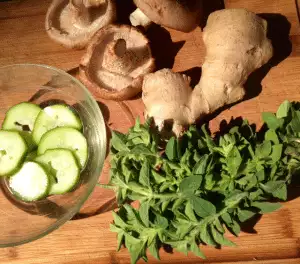 s, too many calories, and the wrong kinds of foods.
An anti-inflammatory diet is, first and foremost, a low calorie diet. The meaning of “calorie” is, after all, a unit measurement of heat energy. Simply put, ingesting more calories creates more heat in the body. If the calories aren’t being burned through physical activity, then they are stored in the body as excess fat. Fat not only weighs you down, but triggers the immune system, which tries to attack the fat as if it was a foreign substance. Carrying excess fat acts on several levels to create detrimental inflammation within the body.
It is important to pay attention not only to what you eat, and how much, but also how you eat, and when. Many people’s eating habits lead to poor digestion.
Eat sitting down. The body draws both blood and Qi into its center – the stomach and spleen – in order to digest food. Eating while standing or walking, or trying to concentrate on some other problem, draws much-needed energy to the extremities or the brain, away from the digestive process.
Chew food thoroughly. Failure to chew adequately means that the rest of your digestive system has to work harder to break down your food into usable nutrition.
In general, choose more fresh, raw, and lightly cooked foods, and avoid baked, fried and heavily processed foods. These foods retain the heat energy that was used in their preparation, and that creates more heat inside you.
Increase your use of ginger, turmeric and herbs like rosemary, thyme, and oregano, all of which have anti-inflammatory properties. Choose high Omega-fatty-acid fish such as salmon, and good quality fish oils. Eat lots of leafy greens. Avoid coffee, and drink green tea instead. Fermented foods such as pickles, sauerkraut/kimchee, miso and tempeh help to heal and promote good balance in the intestines. Shitake mushrooms are a source of copper, a rare nutrient, important in the prevention of arterial inflammation.
It probably comes as no surprise that we recommend cutting back on unhealthy fats (trans fats, processed cooking oils, and fatty red meat). And avoid sugar as strictly as possible, as sugar consumption leads to insulin resistance and is a major cause of inflammation.
Avoid the nightshade vegetables: peppers, eggplants, potatoes and tomatoes. This includes spices and seasonings made from peppers, such as paprika and red pepper flakes. These foods can irritate the intestines, affecting their permeability and setting off unwanted immune responses. These in turn lead to inflammation, muscle spasms and stiffness.
We Help You Heal
 By Qineng Tan, L.Ac., Ph.D.
Traditional Chinese Medicine is based on thousands of years of practical experience and research. It is also based on the philosophy that human beings are one with Nature. Nature built our body with systems to repair itself. Ideally, the body can heal itself from almost anything. But the universe is constantly changing; so are our bodies. People lose their healing ability from time to time, for many different reasons.
When all is balanced and in harmony–in the world, and in our bodies–we experience health and peace. But, everything is not always balanced in the world. In one area, there is a drought, while in another place, a river overflows, flooding the land. Our bodies, too, are often out of balance. One area weakens. Another area becomes stagnant. When we experience disease and trauma, it is both a reaction to and a reflection of imbalances in our environment and inside the body. Nature is cyclical; it is constantly creating, then destroying, and rebuilding.
Over time, some of our Qi–especially kidney Qi–drains away. The aging process affects the functioning of the organ systems and the healing process of the body. A healthy person in their 20s recovers quickly from a cold or flu, for instance. If they twist an ankle, they rest for a week or two, then function like new again. When you get older, your body starts to weaken due to trauma, environmental changes, toxins, and stress. Your healing power gets weaker and weaker. The body can’t regenerate tissues and healthy Qi like it used to. The kidneys and liver lose function; that is why people become diseased.
Are you experiencing one of the following?:
- Ongoing sneezing and allergies
- Getting sick easily or the same cold keeps coming back
- What used to be an occasional twinge becomes a daily ache
- An injury or wound seems to take a long time to heal
- A stable condition suddenly gets active and difficult to control
- Constant fatigue, difficulty generating energy without coffee
Health is never a final endpoint. No one–even me!– can say, “Now I am in excellent health, and I will be forever!” Health is about relative balance. There are good things on one side – healthy habits, good energy, and a sense of well-being–and on the other side, bad things–stress, pain, recurring issues and weaknesses. As we get older, the bad things start piling up, and the scale can tip to one side. When this happens, we must put in effort to add more to the “good” side – by exercising, eating well, resting appropriately, meditating, and getting regular acupuncture treatments. Acupuncture can play an important role in the healthy aging process.
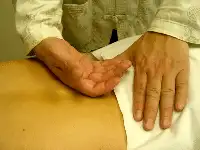
Acupuncture helps you build up your healing process. We give support to the organ systems, the nervous system, the lymphatic system, the immune system. We adjust the flow of Qi and increase blood flow to help build a weak area up, unblocking stagnation. TCM works on a deeper level, healing problems at their source, so that a person has a chance of recovering in a more meaningful, lasting way.
Yin-Yang: and What It Means in Traditional Chinese Medicine
by Qineng Tan, L.Ac., Ph.D.
The concept of Yin and Yang is central not only to the ancient Chinese phil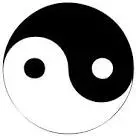 osophy called Taoism, but also to the philosophy and practice of Traditional Chinese Medicine. It is a concept of dualism, meaning that everything in the Universe is made up of two opposing, yet interdependent, forces. One type of energy will lead to the other, and back again, over and over: day into night, darkness into light, birth into death, and so on. Without Yang, there is no Yin, and without Yin there can be no Yang. They cannot exist independently.
You have seen the Yin-Yang symbol many times: two teardrop shapes, one black, one white, chase each other around in a circle. Inside each teardrop is a small circle of the opposite color. This visual representation of Yin-Yang serves as a reminder that within each type of energy, some of the other is also lurking, and vice versa.
In Mandarin Chinese, the character for Yin – 阴 – can have several meanings, including: “feminine,” “moon,” and “cloudy.”
The Yang character – 阳 – means “masculine,” “sun,” and “bright.”
Yin-Yang is not just about opposites, though, and to reduce it to ideas like male-female, or dark-light, is too simplistic. Yin-Yang is about transformation–the biggest, most meaningful transformations that occur in our lives and in the world all around us. It is also about balance. The dual energies of Yin and Yang must work in harmony at all times. If there is too much of one energy, there will be too little of the other, and something will have to change in order to restore the balance.
This is where the concept of Yin-Yang comes into play in Traditional Chinese Medicine. Illness occurs in the body when there is an imbalance of energies. Imbalances will show up as problems in the organ systems. Some organs relate the to Yin meridian (including the kidney, liver, lungs, spleen and heart), while others relate to the Yang meridian (stomach, large intestine, small intestine, gall bladder).
Considering the functions of the human body, Yang refers to active energy and heat, while Yin is passive energy, and cold. When a patient comes to us, we are looking and listening closely to find out how the imbalance is revealing itself. For example, swelling is a Yin condition, while pain is a Yang condition. Once we have begun to determine the nature of the imbalance, we will not only perform acupuncture, but also prescribe herbs and specific foods, as well as lifestyle changes, that will help restore the balance of Yin and Yang in the body.
Because you cannot have Yang without Yin, and so on, we focus on keeping both parts alive and strong. If you kill the Yin energy, you will also kill the Yang energy. In Chinese medicine, when we want to increase or strengthen one kind of energy, we call it “tonification.” Reduction, or calming, of energy is “restoring.” So, if a patient has, for example, excessive Yang and weak Yin, we will work to tonify the Yin and restore the Yang.
According to the philosophy of Yin and Yang, even the worst situation has some positivity hiding within it. So, we always look for the other side. As you travel along on your personal journey towards optimal health, keep in mind that pain and illness appear to show you where you need to work to create balance in your own life.