

- Art of Wellness Acupuncture & Traditional Chinese Medicine (TCM)11704 Wilshire Blvd, Suite 295, Los Angeles, CA, 90025
myartofwellness@gmail.com310-451-5522 - Sign up to receive news and updates and get my free report:“The Top 10 Reasons to Try Acupuncture”

Acupuncture
Does Your Liver Need a Spring Tune-Up?
In Traditional Chinese Medicine, each season is ruled by a particular organ system and spring is connected to the liver. What does this mean? Well, you probably notice changes in the way you feel, both physically and mentally, as the seasons change. I know I tend to feel a bit more contemplative and introspective during the winter months. Once spring hits, I’m ready to recharge and get things done. The liver energy is strong and assertive, the type of energy you need to create plans and then propel them into motion. However, if your liver is a little out of balance, you might notice you are more irritable or on edge than usual. Here are a few signs that your liver is in need of an acupuncture tune-up: continue reading
Acupuncture and colon cancer
 Colon cancer is the third most common cancer in the United States with about 60,000 deaths from it every year. Like all cancer, treatment can be long, uncomfortable and come with many side effects. Those getting chemotherapy may experience nausea, vomiting, postoperative pain, cancer related pain, insomnia and anxiety. The chronic pain can significantly impact quality of life. Most patients are prescribed medications such as opioids for pain that have side effects and are highly addictive. continue reading
All About Moxibustion
Traditional Chinese Medicine is a medical system that incorporates numerous methods for treating disease and illness. One of the tools found in the toolbox of the TCM practitioner is known as moxibustion.

Moxibustion is a technique that involves the burning of mugwort, known as moxa, which is an herb that facilitates healing. The purpose of moxibustion is to stimulate the flow of Qi (pronounced “chee”), strengthen the blood and maintain general health. Qi is translated as life energy. There are two types of moxibustion, direct and indirect. Direct moxibustion uses moxa shaped into a small cone and is placed on top of an acupuncture point and burned. This type of moxibustion has two subcategories, scarring and non-scarring. Scarring moxa burns until it distinguishes on its own. This may lead to localized scarring and blisters. Non-scarring moxa allows for the moxa to be placed on the acupuncture point, lit, extinguished and removed before it burns the skin. continue reading
Wisdom Story from Dr. Tan – Bian Que and the King
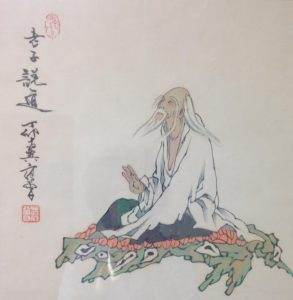 There once was a well-known Chinese physician who lived over 2300 years ago, named Bian Que. One day, the King called Bian Que to him and asked him: “I hear you have two brothers who are also physicians. Can you tell me–who is the best physician? Now, be honest!”
Bian Que answered, “My oldest brother is the best. My second brother is better than me. Actually, I am just average.”
The King was surprised. “But you are the one who is famous throughout China! Why do you say they are better than you?”
Bian Que said, “My oldest brother believes in a lot of prevention. He looks for the source of illness and treats problems before people even feel anything. So, his patients don’t even realize how much he has done for them, and they don’t talk about him much.
“My second brother treats people at the first sign of a disease. They are having some symptoms, so he treats them before they get any worse. Because of this, people notice that he has helped them, and he has become fairly well-known in our home town.
“But me? People come to see me as a last resort, when they are already very sick. I use the strongest herbs, the most powerful acupuncture treatments. I even perform surgeries! In fact, a lot of the time, I can’t do anything to help them because they are already too ill. But sometimes I am able to save someone’s life. That is the kind of thing people like to talk about, so I am the one who has become famous.”
So, the King understood his meaning: the best physician is the one who prevents his patients from becoming sick, not the one who tries to save them when they are already near death.
Heart Afire: The Fire Element
The organs in Chinese medicine are more than just a physical representation. The organs include not only their physiological function, but also their mental, emotional, spiritual and elemental qualities that align with nature and the seasons. Let’s explore the heart.
The heart season is summer, and heart is considered the most yang: hot, bountiful and abundant. Yang is what is bright, moving, outward, hot and loud. Yin is what is more inward, still, dark and cooler. The color of the heart is associated with red, the climate is heat, the flavor is bitter and it’s paired organ is the small intestine (many urinary issues are due to “heart fire” heat descending). The sense aligned with heart is the tongue, and the vessels associated with heart are the tissues. The heart sound is laughing, and the emotion is joy. The heart houses what is known as the shen, which is the mind and spirit. continue reading